






VR Therapy Suite™
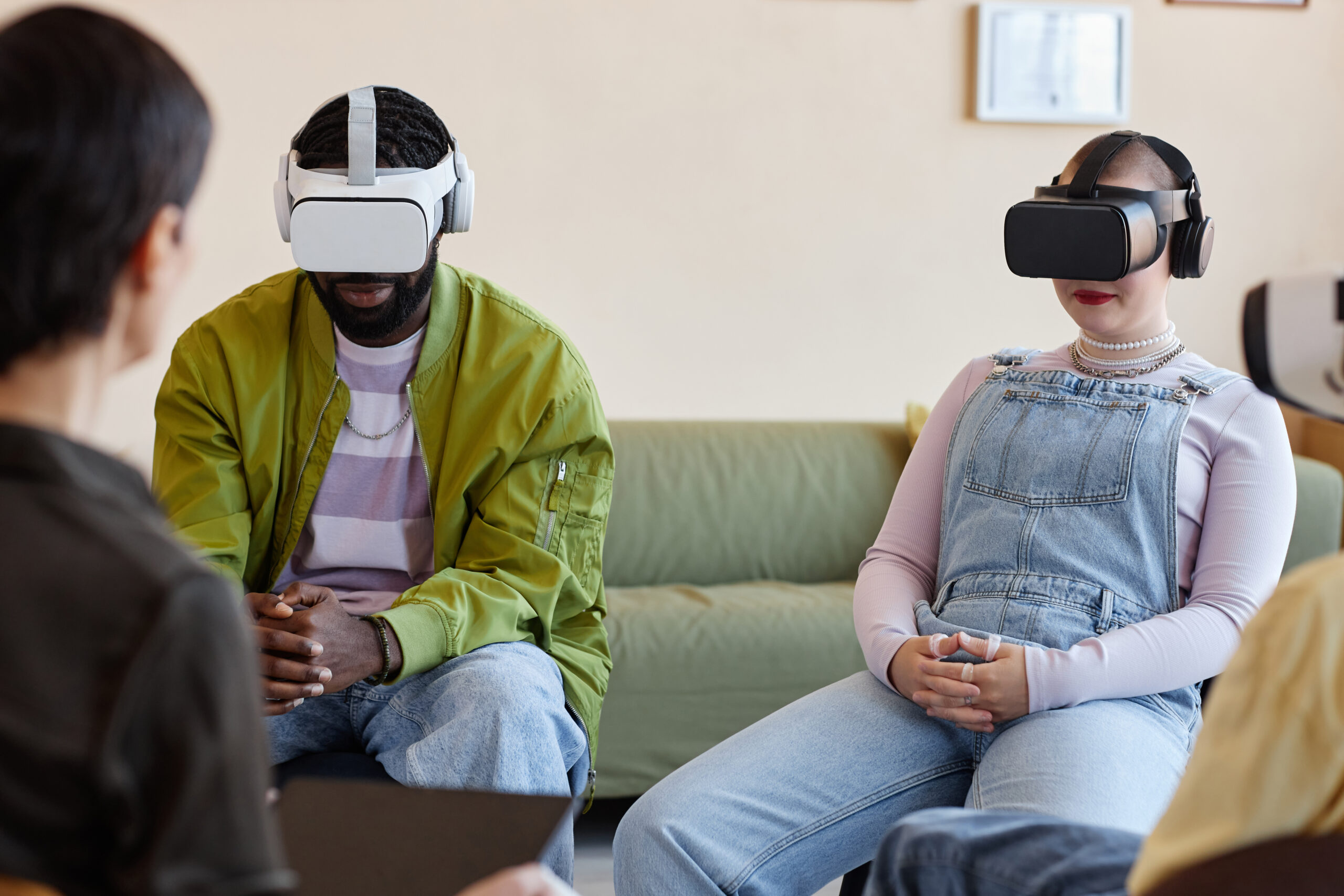
A new tool to treat fear through Virtual Reality Exposure Therapy (VRET).
why
Discover the power of VR therapy – a groundbreaking solution to tackle numerous illnesses and anxieties. Embrace a new realm of healing. Explore virtual possibilities today!
About Us .
At Vrilliant Studios, we take pride in being the forefront providers of innovative VR therapy solutions. Our dedicated team of professionals combines expertise in psychology and virtual reality to create transformative healing experiences. We believe in the power of immersive simulations to address a wide range of physical and mental health challenges.
Our mission is to empower individuals on their journey to wellness, offering a safe and controlled environment that promotes lasting positive change.
Discover the transformative potential of VR therapy with Vrilliant Studios. Take the first step towards a healthier and happier life today. Reach out to us to explore a world of healing possibilities through the realm of virtual reality.
Our offer
Our virtual reality environments are designed using the latest and most effective principles in psychology, incorporating scientific research and official guidelines on cognitive-behavioral therapy.
Pre-Installed VR Headset.
To minimize set-up effort, all head-sets come pre-installed with only the final steps needing to be done on-site. Future updates are automatically sent to headsets.
+
Access to our Therapy Suite allowing you to steer any experience from your smart-phone
Access to Usage Wiki & Customer Support
How it Works
A user-friendly approach to expand patients’ treatment options, while reducing treatment effort for therapists
01. Close to Clients
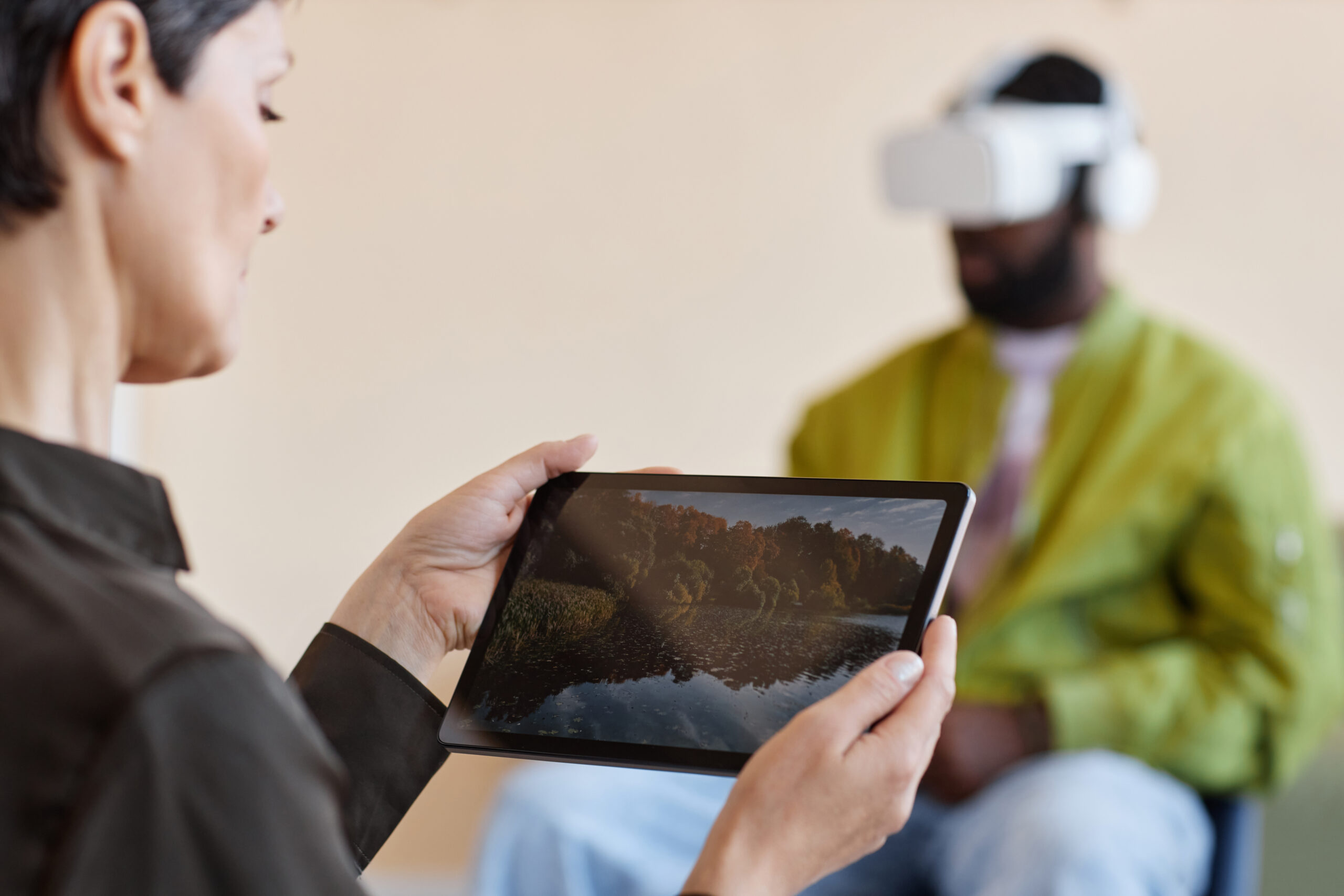
You are the expert. Conduct exposure therapy like you are used to, and always stay in touch with the patient.
02. Safe Space
Through the immersion of VR, the patient faces their fears, while being in a safe and relaxed environment.
03. Easy Control
Using a smartphone or any other device with a web browser, you have complete control over what the patient sees or hears.
The benefits
Our digital therapy suite has been completely designed with therapists, clinics and patients in mind. Here are your benefits
- Clinics
- Therapists
- Patients
Competitive advantage
You can position yourself as an expert and get more clients. Interest in virtual reality as a selling point
Lorem Ipsum
By providing state-of-the-art technology and innovative treatment modalities, the clinic can position itself as a leader in the treatment of anxiety disorders and attract patients seeking advanced and effective interventions.
Enhanced Treatment options
By incorporating VR therapy, a clinic can expand its range of treatment options for anxiety disorders. VR provides a cutting-edge and evidence-based approach that can complement traditional therapies, offering patients a comprehensive and innovative treatment experience.
Positive Clinic Image and Patient Satisfaction
Commitment to offering state-of-the-art treatments and staying current with advancements in mental health care. This can enhance the clinic's reputation, build trust among patients, and contribute to overall patient satisfaction.
Reduced effort
Exposure therapy is conveniently feasible in an office, without time-consuming organizing or travelling
Time saving
Therapists can treat more patients because travel time is reduced
Enablement
Therapist can present situations that are otherwise difficult to access (e.g. certain animals, flying)
Money Saving
Therapist cannot bill e.g. travel for in vivo exposure
Control
Therapist has control over scenario (e.g. how many people are present in a flight)
Sense of security
Patients have lower inhibition and less shame than in public
Lorem Ipsum
Patients can face their fears at a pace they are comfortable with, which can help reduce anxiety and provide a sense of security.
Increased motivation
Patients have higher motivation to take part in exposure therapy due to increased security
Enhanced Learning and Coping Skills
Patients can develop and refine their strategies for managing anxiety and stress, gaining confidence and resilience that can be applied in real-life situations
Tailored to each patient’s specific needs
Treatment Scenarios
Our virtual reality environments are designed using the latest and most effective principles in psychology, incorporating scientific research and official guidelines on cognitive-behavioral therapy.
Aerophobia
Guide patients through various settings and stimuli they may experience during air-travel that cause them un-ease.
Acrophobia
(Coming Soon)
Work with patients to conquer their fear of heights in a safe setting, allowing for a step-by-step approach.
Glossophobia
(Coming Soon)
Allow patients to practice public speaking while having full control over environment, audience size and audience behaviour.
Our Team

Laszlo
Prof. for Digital Signal Transmission & VR
Lead LCSP Engineer at multiple fortune 500 companies
M.Sc. Electrical Engineering

Simon
Lead Product Designer
UX Design consultant and VRilliant lead product designer.
M.Sc. Psychology Focus Human Machine Interaction

Roland
CEO VRilliant Studios
Intl’ IT project manager and experienced technology strategy consultant
M.Sc. Innovation & Technology Mgmt.
Medical background
- Evidence-Based Efficacy
- Mechanism of Action
- Neurological Underpinnings
- Safety and Tolerability
Over the past decade, a surge of peer-reviewed studies has consistently demonstrated the efficacy of Virtual Reality Exposure Therapy (VRET) in treating a wide range of fear disorders.
Diverse Fear Disorders:
Studies such as those conducted by C. Suso‐Ribera et al. have demonstrated VRET's effectiveness across a wide spectrum of fear disorders. From specific phobias, like fear of spiders or heights, to more generalized conditions like social anxiety, VRET has consistently shown positive therapeutic outcomes.
Meta-Analyses & Systematic Reviews:
Comprehensive reviews, like the one by C. Botella et al., have aggregated results from multiple individual studies, further solidifying the evidence base for VRET. These reviews provide a holistic view of VRET's efficacy, taking into account variations in study design, patient demographics, and therapeutic protocols.
Through the immersion of VR, the patient faces their fears, while being in a safe and relaxed environment.
Exposure Therapy Principles:
At its core, VRET operates on established principles of exposure therapy. By repeatedly exposing patients to fear-inducing stimuli in a controlled environment, the therapy aims to reduce or eliminate the conditioned fear response.
Extinction Learning:
VRET facilitates the process of extinction learning. Over time, as patients confront and process their fears in the virtual environment, the intensity of their fear response diminishes. This is a well-documented psychological phenomenon that VRET leverages to its advantage.
Controlled Exposure:
One of the primary medical advantages of VRET is the ability to expose patients to anxiety-inducing stimuli in a safe and controlled environment. This ensures that patients can confront their fears without any real-world risks, making the therapy more accessible and tolerable.
Reduced Trauma:
Traditional exposure therapies can sometimes be traumatic for patients, especially when dealing with severe phobias or PTSD. VRET, by virtue of its virtual environment, can reduce the potential trauma associated with direct real-world exposure.
Brain Activity Modulation:
Research, such as the study by A. Landowska et al., has shown that VRET can influence patterns of brain activity associated with fear and anxiety. By modulating these patterns, VRET can directly impact the neurological basis of fear disorders.
Neuroplasticity:
The brain's ability to reorganize itself, both in structure and function, is a key factor in the success of VRET. As patients undergo therapy, the neural pathways associated with fear can be rewired, leading to long-lasting therapeutic benefits.
Virtual Reality, Augmented Reality, and In Vivo Exposure Therapy: A Preliminary Comparison of Treatment Efficacy in Small Animal Phobia by C. Suso‐Ribera et al. (2019)
Experiences of Gamified and Automated Virtual Reality Exposure Therapy for Spider Phobia: Qualitative Study by P. Lindner et al. (2020)
Lack of research on efficacy of virtual reality exposure therapy (VRET) for anxiety disorders in children and adolescents by O. Kothgassner and A. Felnhofer (2020)
A Comparison of Active and Passive Virtual Reality Exposure Scenarios to Elicit Social Anxiety by Y. Sekhavat and Poorya Nomani (2017)
Virtual Reality Exposure Therapy for Driving Phobia Disorder (2): System Refinement and Verification by A. Trappey et al. (2020)
Is Continued Improvement After Automated Virtual Reality Exposure Therapy for Spider Phobia Explained by Subsequent in-vivo Exposure? A First Test of the Lowered Threshold Hypothesis by P. Lindner et al. (2021)
A Meta-Analysis of the Efficacy of Virtual Reality and In Vivo Exposure Therapy as Psychological Interventions for Public Speaking Anxiety by R. Reeves et al. (2021)
Enhancing exposure therapy for posttraumatic stress disorder (PTSD): a randomized clinical trial of virtual reality and imaginal exposure with a cognitive enhancer by J. Difede et al. (2022)
The Efficacy of a Virtual Reality Exposure Therapy Treatment for Fear of Flying: A Retrospective Study by Amihai Gottlieb et al. (2020)
Behavioral and Magnetoencephalographic Correlates of Fear Generalization Are Associated with Responses to Later Virtual Reality Exposure Therapy in Spider Phobia by K. Roesmann et al. (2021)
Efficacy of virtual reality exposure therapy and eye movement desensitization and reprocessing therapy on symptoms of acrophobia and anxiety sensitivity in adolescent girls: A randomized controlled trial by Parisa Azimisefat et al. (2022)
Driving Simulation as Virtual Reality Exposure Therapy to Rehabilitate Patients with Driving Fear After Traffic Accidents by S. Schoch et al. (2019)
Virtual Reality Exposure Therapy for Anxiety and Related Disorders: A Meta-analysis of Randomized Controlled Trials by C. Carl et al. (2019)
Virtual Reality Exposure Therapy for Anxiety and Stress Disorders by A. Mühlberger et al. (2018) – 37 citations. PDF
Virtual Reality Exposure Therapy for Post-Traumatic Stress Disorder and Other Anxiety Disorders by A. A. Rizzo et al. (2015)
Virtual Reality Exposure Therapy for Social Anxiety Disorder: A Randomized Controlled Trial by P. M. Yellowlees et al. (2018)
Virtual Reality Exposure Therapy for Agoraphobia: A Pilot Study by A. M. Benbow et al. (2018)
Virtual Reality Exposure Therapy for Anxiety and Related Disorders: A Meta-Analysis of Randomized Controlled Trials by C. Carl et al. (2019)
Virtual Reality Exposure Therapy for the Treatment of Dental Phobia: A Controlled Feasibility Study by A. M. Benbow et al. (2018)
Virtual Reality Exposure Therapy for the Treatment of Posttraumatic Stress Disorder: A Methodological Review Using CONSORT Guidelines by A. M. Benbow et al. (2018)
Schedule a Demo
Get in touch and schedule your demo today.

